
At NSC BD, we provide world-class ISO consultancy and certification solutions, enabling businesses to align with globally recognized standards. Our expertise spans across quality, food safety, environmental, and information security management systems, helping organizations strengthen compliance, enhance operational efficiency, and build international credibility. With a client-focused approach and proven methodologies, we deliver tailored strategies that drive continuous improvement and sustainable business excellence.
For ISO 9001:2015, ISO 14001:2015, ISO 22000:2018, and ISO 45001:2018, we offer:
ISO 9001:2015 is a global standard for Quality Management Systems (QMS), built on seven principles: customer focus, leadership, engagement, process approach, improvement, evidence-based decisions, and relationship management. It ensures consistent quality and customer satisfaction.

Defines internal/external factors and stakeholder needs.
Drives QMS alignment with strategy.
Uses risk-based thinking for proactive quality management.
Ensures resources, competence, and documentation.
Monitors via audits and reviews.
Promotes continual enhancement
Manages risks and opportunities.
Tailored documented information.
Prioritizes satisfaction.
Ensures consistent outcomes.
Globally recognized quality commitment.
Streamlines processes, reduces waste.
Enhances satisfaction.
Meets industry demands.
Aligns with regulations.
The ISO 14000 series provide a global framework for effective Environmental Management Systems (EMS), enabling organizations to minimize environmental impact, ensure regulatory compliance, and drive sustainability.
Identifies and prioritizes food safety hazards.
Establishes hygiene controls (e.g., sanitation, pest control).
Manages hazards via Critical Control Points.
Uses PDCA for systematic improvement.
Ensures stakeholder engagement.
Monitors and validates FSMS effectiveness.
Globally recognized quality commitment.
Streamlines processes, reduces waste.
Enhances satisfaction.
Meets industry demands.
Aligns with regulations.
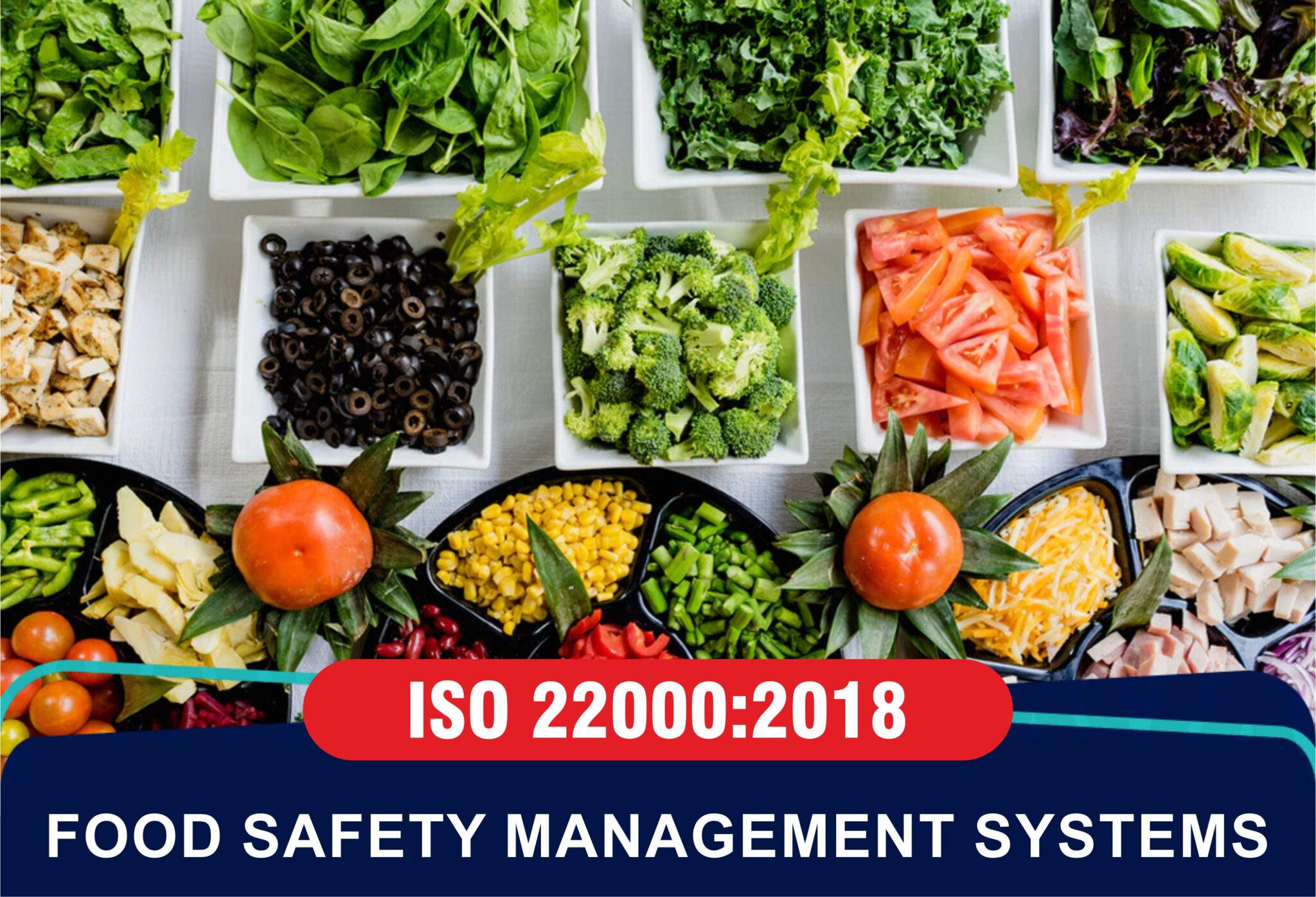
ISO 22000:2018 is a global standard for Food Safety Management Systems (FSMS), ensuring safe food products across the supply chain through HACCP, risk-based thinking, and PDCA.

Identifies and prioritizes food safety hazards.
Establishes hygiene controls (e.g., sanitation, pest control).
Manages hazards via Critical Control Points.
Uses PDCA for systematic improvement.
Ensures stakeholder engagement.
Monitors and validates FSMS effectiveness.
Globally recognized quality commitment.
Streamlines processes, reduces waste.
Enhances satisfaction.
Meets industry demands.
Aligns with regulations.
FSSC 22000 is a GFSI-recognized certification scheme integrating ISO 22000:2018 with additional food safety requirements. It ensures robust food safety management across the food supply chain, enhancing consumer trust and global market access.

Minimizes foodborne illness risks.
Meets GFSI and retailer standards.
Enhances brand credibility.
Aligns with regulations.
Optimizes processes.
ISO 27001:2022 is the global standard for Information Security Management Systems (ISMS), providing a framework to protect information assets, ensure data confidentiality, integrity, and availability, and manage cybersecurity risks.

Defines ISMS context, including organizational needs and stakeholder expectations.
Requires top management to drive ISMS alignment and security culture.
Uses risk-based thinking to identify and mitigate information security risks.
Ensures resources, competence, awareness, and documented information.
Monitors via audits, reviews, and metrics.
Drives continual enhancement of the ISMS.
Identifies and manages information security risks.
Includes 93 controls (updated in 2022) for cybersecurity, e.g., access control, encryption.
Tailored “documented information” for ISMS processes.
Uses Annex SL for integration with ISO 9001/14001.
Protects data confidentiality, integrity, and availability.
Meets regulatory and industry requirements.
Enhances stakeholder confidence.
Reduces cybersecurity threats.
Meets client demands for certified security.
ISO 45001:2018 is the global standard for Occupational Health and Safety Management Systems (OHSMS), designed to prevent workplace injuries and promote employee well-being across all industries.

Protects data confidentiality, integrity, and availability.
Meets regulatory and industry requirements.
Enhances stakeholder confidence.
Reduces cybersecurity threats.
Meets client demands for certified security.
The BRC Global Standard for Food Safety (Issue 9) is a GFSI-recognized certification ensuring food safety, quality, and legality across the food supply chain. It provides a framework for manufacturers and processors to meet retailer requirements and protect consumers.
Reduces foodborne illness risks.
Meets GFSI and retailer standards.
: Enhances brand credibility.
Aligns with regulations.
Optimizes processes.
HACCP is a global food safety system to prevent foodborne illness by identifying and controlling hazards in the food supply chain.

Good Manufacturing Practices (GMP) are guidelines ensuring products, especially in food, pharmaceuticals, and cosmetics, are consistently produced and controlled to meet quality and safety standards.

Establishes systems for consistent product quality.
Requires trained, hygienic staff.
Ensures clean, maintained production environments.
Defines standardized manufacturing procedures.
Mandates records for traceability and compliance.
Includes testing and verification of products.
Good Catering Practices (GCP) are guidelines ensuring safe, hygienic, and quality food preparation and service in catering operations, aligning with food safety regulations and standards.
Maintains clean facilities, equipment, and personal hygiene.
Implements controls to prevent contamination and foodborne illness.
Ensures staff are trained in food safety and handling.
Standardizes food preparation, storage, and service procedures.
Requires records for traceability and compliance.
Addresses allergen identification and cross-contamination risks.
Halal certification confirms that products or services comply with Islamic dietary laws, ensuring permissibility (halal) for Muslim consumption or use. It covers food, beverages, pharmaceuticals, cosmetics, and logistics.
Includes food, pharmaceuticals, cosmetics, and processes like manufacturing, packaging, and transport.
Prohibits pork, alcohol, and non-halal animal derivatives; emphasizes hygiene and ethical practices.
Independent organizations conduct audits and inspections to verify compliance.
Involves application, assessment, facility inspection, and certificate issuance.
Enables entry to Muslim-majority markets and appeals to quality- conscious consumers.
Supports international trade with standardized Halal regulations.
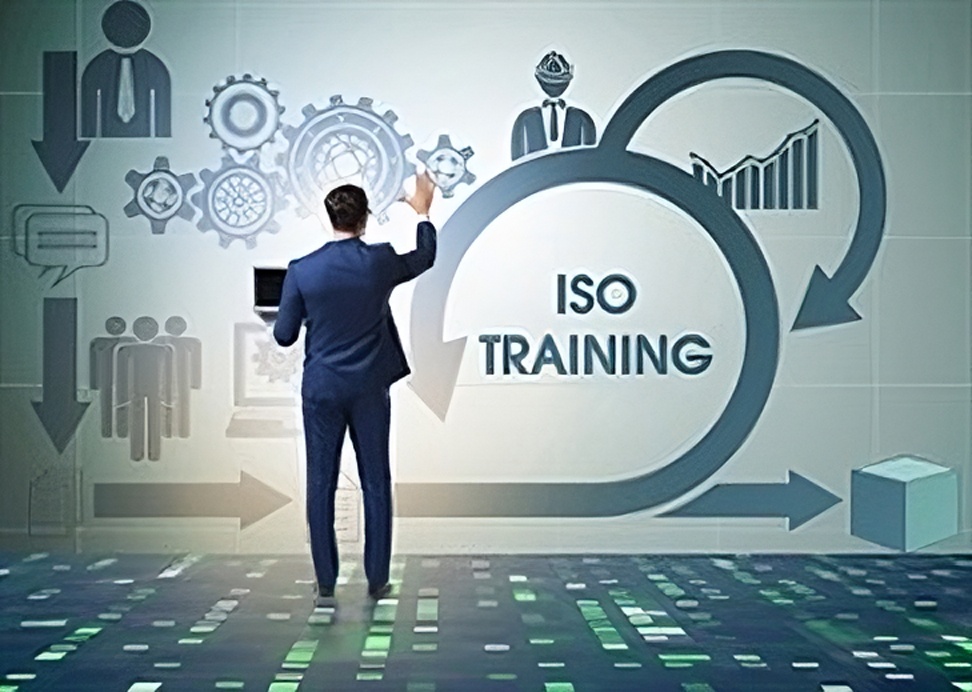
Below is a concise, professional overview of training details for ISO 9001:2015 (Quality Management System), ISO 14001:2015 (Environmental Management System), ISO 22000:2018 (Food Safety Management System), and ISO 45001:2018 (Occupational Health and Safety Management System). Each standard requires tailored training to ensure effective implementation, compliance, and certification. Note: There is no “ISO 45000”; the correct standard is ISO 45001:2018.
Awareness Training: Introduces the standard’s purpose, benefits, and key requirements for all staff.
Implementation Training: Focuses on developing and integrating the management system for relevant personnel.
Internal Auditor Training: Equips individuals to conduct internal audits, ensuring compliance and effectiveness.
Lead Auditor Training: Prepares professionals for external audits and certification processes (often certified by bodies like IRCA or Exemplar Global).
Specialized Training: Covers specific aspects, e.g., risk management, HACCP (for ISO 22000), or legal compliance.

Key Outcomes:
– Ability to align QMS with organizational goals.
– Competence in risk-based thinking and process optimization.
– Preparation for certification audits and continual improvement.
Training Details:
Awareness (1 day): Overview of QMS, benefits, and roles in implementation.
Implementation (2–3 days): Developing policies, quality objectives, risk assessments, and documented information.
Internal Auditor (2–3 days): Auditing techniques, non-conformity reporting, and corrective actions.
Lead Auditor (5 days): Comprehensive audit planning, execution, and reporting for certification.
Target Audience: Quality managers, process owners, auditors, and senior management.
Delivery: In-person, online, or blended; offered by accredited provider
Training Focus;
Key Clauses: Context (4), Leadership (5), Planning (6, including environmental aspects and risks), Support (7), Operation (8), Performance Evaluation (9), Improvement (10).
Principles: Risk-based thinking, environmental performance, stakeholder engagement, PDCA cycle.
Skills: Environmental aspect identification, legal compliance, risk assessment, and emergency preparedness.
Training Details:
Awareness (1 day): Introduction to EMS, environmental impacts, and benefits.
Implementation (2–3 days): Developing EMS policies, objectives, risk assessments, and compliance obligations.
Internal Auditor (2–3 days): Auditing environmental performance and compliance.
Lead Auditor (5 days): Managing external audits and certification processes.
Delivery: Online, in-person, or hybrid; provided by accredited bodies.

Key Outcomes:
Competence in managing environmental risks and compliance.
Skills to integrate EMS with business operations.
Readiness for certification and sustainability goals.
Training Focus:
Key Clauses: Context (4), Leadership and Worker Participation (5), Planning (6, including hazard identification), Support (7), Operation (8), Performance Evaluation (9), Improvement (10).
Principles: Risk-based thinking, worker participation, hazard control, continual improvement.
Skills: Hazard identification, risk assessment, emergency preparedness, and worker engagement.
Training Details:
Awareness (1 day): Introduction to OHSMS, benefits, and workplace safety principles.
Implementation (2–3 days): Developing OHSMS policies, risk controls, and emergency plans.
Internal Auditor (2–3 days): Auditing OH&S performance and compliance.
Lead Auditor (5 days): Managing external audits and certification processes.
Target Audience: Safety officers, HR, auditors, and senior management.
Delivery: Online, in-person, or hybrid; offered by providers like SAI Global, Intertek.
Key Outcomes:
Competence in managing workplace safety risks.
Skills to foster a safety culture and ensure compliance.
Readiness for OHSMS certification and audits.

Key Outcomes:
Competence in managing workplace safety risks.
Skills to foster a safety culture and ensure compliance.
Readiness for OHSMS certification and audits.
Training Focus:
Key Clauses: Context (4), Leadership and Worker Participation (5), Planning (6, including hazard identification), Support (7), Operation (8), Performance Evaluation (9), Improvement (10).
Principles: Risk-based thinking, worker participation, hazard control, continual improvement.
Skills: Hazard identification, risk assessment, emergency preparedness, and worker engagement.
Training Details:
Awareness (1 day): Introduction to OHSMS, benefits, and workplace safety principles.
Implementation (2–3 days): Developing OHSMS policies, risk controls, and emergency plans.
Internal Auditor (2–3 days): Auditing OH&S performance and compliance.
Lead Auditor (5 days): Managing external audits and certification processes.
Target Audience: Safety officers, HR, auditors, and senior management.
Delivery: Online, in-person, or hybrid; offered by providers like SAI Global, Intertek.
A small river named Duden flows by their place and supplies it with the necessary
regelialia. It is a paradisematic country, in which